BOFENG Machinery have specialized in producing and exporting Machining Equipment


News Center
Contact us
 +86-510-85121486
 No.555-1023,Liangqing Road, Binhu District, Wuxi, China. PC: 214063
Related News
How to choose a suitable gantry CNC milling machine?
In modern manufacturing, CNC milling machines play a vital role, especially gantry CNC milling machines, which are widely used in many industries such as mechanical processing, aerospace, automobile manufacturing, and mold manufacturing. Due to its excellent rigidity, high precision and strong load-bearing capacity, gantry CNC milling machines have become the preferred equipment for processing large and complex workpieces. However, there are many types of gantry CNC milling machines on the market, and how to choose a suitable gantry CNC milling machine has become an important issue faced by many manufacturers. This article will explore in depth from multiple angles how to choose a suitable gantry CNC milling machine.
1. Understand the basic structure and function of gantry CNC milling machines
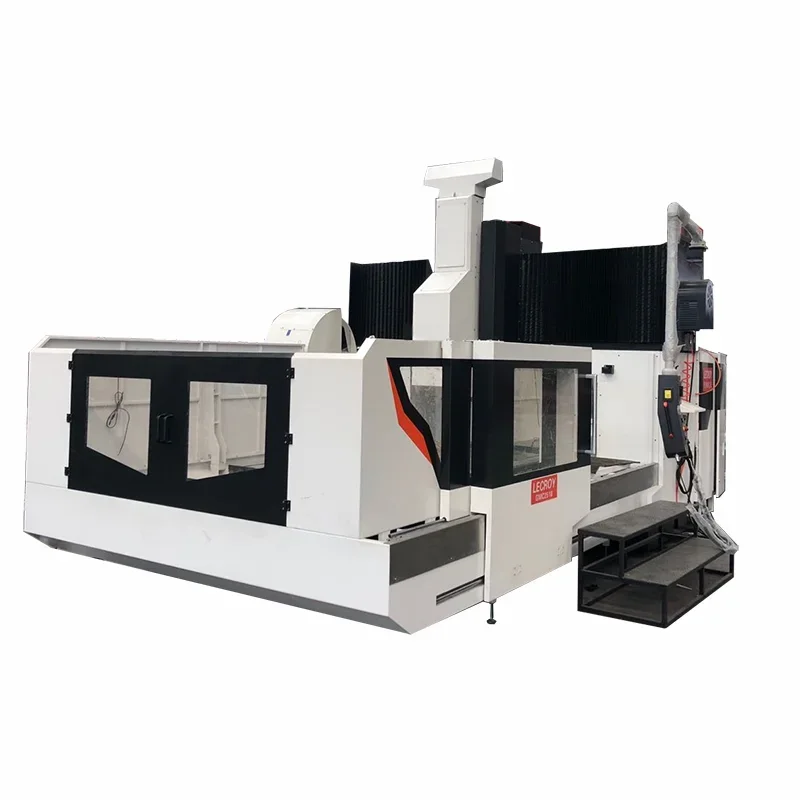
First of all, we need to have a clear understanding of the basic structure and function of gantry CNC milling machines. Gantry CNC milling machines are usually composed of bed, column, beam, workbench, spindle, CNC system, and other components. Its biggest feature is that the structure is "gantry", that is, the support structure of the spindle and column is connected by a pair of beams, which makes the machine tool have high rigidity and stability. Due to this unique structure, the gantry CNC milling machine can provide a large processing range and is suitable for processing large workpieces.
The functions of gantry CNC milling machines are mainly reflected in the following aspects:
High-precision processing: It can perform high-precision milling processing, which is suitable for the manufacture of high-demand workpieces such as precision molds and aviation parts.
Large-size processing: Compared with traditional vertical or horizontal CNC milling machines, gantry CNC milling machines have larger worktable sizes and load-bearing capacity, and can process large workpieces.
Multi-axis linkage: Some high-end gantry CNC milling machines are equipped with 4-axis and 5-axis linkage functions, which can perform more complex processing.
2. Determine processing requirements
Before choosing a gantry CNC milling machine, you must first clarify your processing requirements. Different processing requirements will affect the choice of equipment, including the required processing accuracy, the size, weight, and material of the workpiece.
2.1 Size and weight of the workpiece to be processed
The worktable of a gantry CNC milling machine is usually larger, which is suitable for processing heavy and large workpieces. If you mainly deal with small parts, you may not need to choose a gantry CNC milling machine, and a standard CNC milling machine will be enough. However, if your work requires processing large molds, aircraft fuselages, ship parts, etc., it is particularly important to choose a gantry CNC milling machine with a larger worktable and higher load-bearing capacity.
2.2 Processing accuracy
Different types of gantry CNC milling machines have different processing accuracy. If extremely high-precision processing is required, such as aerospace parts, medical equipment, etc., a gantry CNC milling machine with a higher level of accuracy should be selected. High-precision gantry CNC milling machines usually use precision linear guides and ball screws, and the control accuracy of the CNC system and spindle system is also high.
2.3 Processing materials
The processing of different materials requires different cutting parameters, so when choosing a gantry CNC milling machine, the material to be processed also needs to be considered. For example, processing steel materials may require stronger cutting force and higher spindle speed, while processing soft materials such as aluminum alloys can choose CNC milling machines with smaller cutting force. According to the hardness of the processing material and the processing requirements, choose the appropriate machine tool performance and configuration.
2.4 Processing type
For the processing of complex three-dimensional surfaces and complex parts, you may need to choose a gantry CNC milling machine that supports multi-axis linkage. For example, a 4-axis or 5-axis linkage machine can cut in multiple directions at the same time, greatly improving processing efficiency and quality.
3. Choose a suitable CNC system
The CNC system of the gantry CNC milling machine is its "core brain", and its performance directly affects the accuracy, speed, and convenience of the processing process. Common CNC system brands include FANUC, SIEMENS, Mitsubishi, Heidenhain, etc. When choosing a CNC system, you need to consider the following points:
3.1 System operability
Modern CNC systems should have strong human-computer interaction functions, clear and easy-to-understand operation interfaces, support Chinese interfaces, and be compatible with common CAD/CAM software, which is convenient for program writing and equipment operation.
3.2 System stability and reliability
The stability of the CNC system directly affects the processing stability of the gantry CNC milling machine. Choosing a CNC system with high brand awareness and good user reputation can better ensure the long-term stable operation of the equipment.
3.3 System maintenance and after-sales service
Considering that the CNC system may fail during long-term use, it is particularly important to choose a CNC system with good after-sales service and technical support. The brand's after-sales service and the availability of accessories are also one of the key factors in the selection.
4. Evaluate the rigidity and stability of the machine tool
The rigidity and stability of the gantry CNC milling machine determine its accuracy and speed during the processing. The rigidity of the machine tool is mainly determined by the design and manufacturing quality of the bed, column, beam, guide rail, spindle and other parts. When choosing, pay attention to the following aspects:
4.1 Material of the bed and column
The bed and column are usually made of high-strength cast iron or steel, with good vibration resistance and rigidity. When choosing, make sure that the material of the bed and column meets the processing requirements and is heat treated or vibration-eliminating to avoid vibration and deformation during processing.
4.2 Guide rails and lead screws
Guide rails and lead screws are important moving parts of machine tools, and their accuracy and rigidity directly affect the processing accuracy. When choosing a gantry CNC milling machine, the manufacturing accuracy of the guide rails and lead screws should be checked to ensure that they have sufficient rigidity and stability to withstand long-term high-load processing.
5. Evaluate processing efficiency
When choosing a gantry CNC milling machine, processing efficiency is also a key factor. High-efficiency machine tools can not only improve production efficiency, but also reduce production costs. The following aspects can help improve the processing efficiency of machine tools:
5.1 Automation function
Modern gantry CNC milling machines are usually equipped with automatic tool changing systems, automatic tool setting systems, etc., which can reduce manual intervention and improve processing efficiency. Especially in mass production, equipment with automation functions can significantly improve production efficiency.
5.2 Rapid tool changing system
Gantry CNC milling machines equipped with a rapid tool changing system can greatly shorten the tool changing time, thereby improving the overall processing efficiency. The rapid tool changing system makes the processing process smoother and reduces the idling time of the machine tool.
6. Budget and cost performance
Finally, when choosing a gantry CNC milling machine, budget is also a very realistic consideration. Generally speaking, the price of gantry CNC milling machines is higher, but the processing accuracy and efficiency they bring are also higher. Therefore, when purchasing, you should choose the most cost-effective equipment according to your own needs and budget. Higher-priced equipment may have more high-end functions, but if these functions are not suitable for your own processing needs, you can choose products with higher cost-effectiveness.
Choosing a suitable gantry CNC milling machine requires comprehensive consideration of processing requirements, CNC system, rigidity and stability of machine tools, processing efficiency, budget and other factors. Through scientific and reasonable evaluation, you can select the gantry CNC milling machine that best suits your production needs, improve production efficiency, ensure processing accuracy, and thus bring greater economic benefits to the enterprise. In the selection process, not only the technical parameters of the machine tool should be considered, but also its maintenance and operating costs in long-term use should be comprehensively considered.


About us
We are ISO9000 certified enterprise, some products has been CE certified and exported to Europe. Totally we have exported to more than 50 countries and had dealers and partner in about 20 countries. BOFENG not only supply machines, but also supply complete solutions and special customized machines.


Product
Contact us
 +86 13771407736 / +86-510-85164849
+86-510-85121486
 sales@wxbofeng.com / david@wxbofeng.com
No.555-1023,Liangqing Road, Binhu District, Wuxi, China

 ZF1012821391
 1012821391
